Bees & Wasps
Bee and Wasp Removal in San Jacinto, CA
Paper wasps under the eaves, yellowjackets in the ground, and honey bees that may be Africanized. In the San Jacinto heat all three build fast, and stinging insects are the one pest where getting it wrong hurts.
Bee and wasp removal in San Jacinto covers three very different stinging insects, and telling them apart decides how the job is handled. Paper wasps hang open combs under the eaves, yellowjackets nest hidden in the ground and walls, and honey bees swarm and build combs that in inland Riverside County can belong to an Africanized colony. The hot, dry valley suits all three, and the wrong move on any of them gets people stung.
The stinging insects San Jacinto actually has
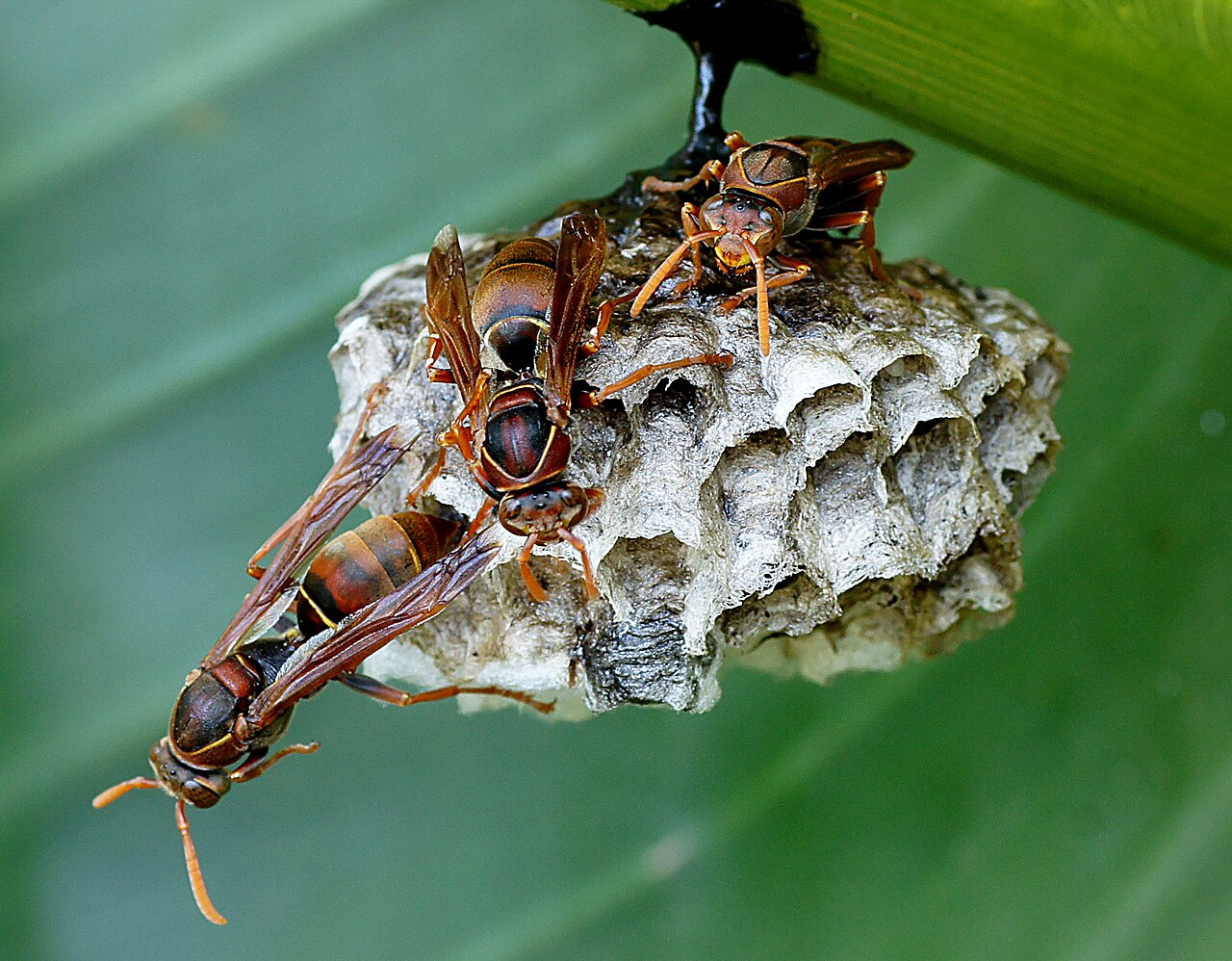
Paper wasps are the most common call. They build the open, upside-down umbrella comb you can see the cells on, tucked under eaves, patio covers, door frames, play structures, and the corners of a porch. A San Jacinto Valley summer lets a small spring nest grow into a large one by late season, and because the nests sit right where people walk and reach, they are the ones that catch a homeowner off guard.
Yellowjackets are the aggressive ground nesters. They dig into the ground, into a slope, or into a wall void and stay hidden until the colony is large, then defend it hard when a mower or a footstep hits the entrance. By late summer they turn scavenger, working the trash cans, the barbecue, and the sweet drinks at an outdoor table. A yellowjacket nest is the one most likely to sting several people at once.
Honey bees are the ones to be careful with. A swarm hanging in a tree or a colony that has moved into a wall, a chimney, or a water meter box may be ordinary honey bees or Africanized honey bees, which are established across inland Southern California and defend their nest far more readily. From the outside you cannot tell which you have, so any established bee colony near a San Jacinto home is treated as a serious job, not a spray-can project.
Why the risk is higher here
The reason stinging insects are worth a call rather than a ladder and a can of spray is simple: they defend the nest, and in this part of the state a honey bee colony may be Africanized. Knocking a nest at the wrong time of day, missing the second entrance, or agitating a wall colony is how a small problem becomes a swarm of stings. An experienced local exterminator reads the species and the site first, then works it in the way that keeps people out of the way of it.
- Africanized honey bees are present in Riverside County and react to disturbance faster and in greater numbers
- A ground yellowjacket nest can send dozens of stings from one wrong step near the entrance
- Long heat lets paper wasp and yellowjacket colonies grow large by late summer
- A honey bee colony in a wall left alone leaves comb and honey that draws rodents, ants, and beetles later
- Anyone in the household with a sting allergy turns a nest near a door into a real medical risk
How a local exterminator handles it
For paper wasps and yellowjackets, the fix is treating and removing the nest at the right time, usually early or late in the day when the colony is home and calm, then clearing the comb so it does not draw pests later. Yellowjacket ground and wall nests need the entrance found and treated directly, and sometimes a second hidden entrance located, which is the part homeowners miss. Once the nest is down, knocking back the paper wasp starts under the eaves keeps new combs from going back up through the season.
Honey bees are their own decision. A fresh swarm that has not built comb can sometimes be removed live, while a colony established in a wall or a box is a structural job: the bees are dealt with, then the comb and honey have to come out so the cavity does not rot, stain, and draw ants and rodents into the wall. Because of the Africanized risk, an established colony by a San Jacinto home is handled by someone equipped for it, not disturbed.
When to call right away
Some stinging insect situations should not wait: a nest by a front door, a garage, or a childrens play area, a ground nest along a walkway or the edge of the lawn, any large colony of bees moving in and out of a wall, chimney, or meter box, and any nest at a home where someone reacts badly to stings. Those are the ones most likely to end with multiple stings.
The rest can be scheduled, but stinging insects only get bigger and bolder as the San Jacinto summer runs, so the cheap, safe time to deal with a nest is while it is still small. Call and describe where it is and what it looks like, and you get a straight read on how urgent it is.
Read more on Africanized bees in San Jacinto and what to do, or call 951-309-9255 and describe what you are seeing.
Related
People who called about this also called about
Questions
Bees & Wasps in San Jacinto, answered
How do I know if the bees are Africanized?
You cannot tell by looking, and that is exactly why an established bee colony is treated carefully here. Africanized honey bees are present across inland Riverside County and look like ordinary honey bees, but they defend the nest far more readily. Any large, established colony near a San Jacinto home should be treated as if it could be Africanized rather than disturbed.
Can you just knock the wasp nest down?
Knocking a nest down without treating it usually scatters the colony and gets someone stung, and yellowjacket nests often have a hidden second entrance. A local exterminator treats the nest so the colony is gone, then removes the comb. That is safer than a ladder and a spray can, especially for a nest by a door or over a walkway.
Why do I need the honey bee comb removed from the wall?
If a colony is killed or leaves and the comb and honey stay in the wall, the honey ferments and leaks, it stains, and it draws ants, beetles, and rodents into the cavity. Removing the comb is what actually finishes the job on a wall or chimney colony, not just clearing the bees.
When are wasps and yellowjackets worst in San Jacinto?
They build through the warm season and peak in late summer and early fall, when colonies are largest and yellowjackets turn to scavenging food and drinks outdoors. A nest found early in the season is small and simple to handle, which is why calling sooner is cheaper and safer.
Talk to a local exterminator
Call and describe your pest problem
Tell us the pest, the property and how long it has been going on. You get straight answers and an honest estimate before any work starts. No obligation.
Calls answered 7am to 9pm, seven days a week